



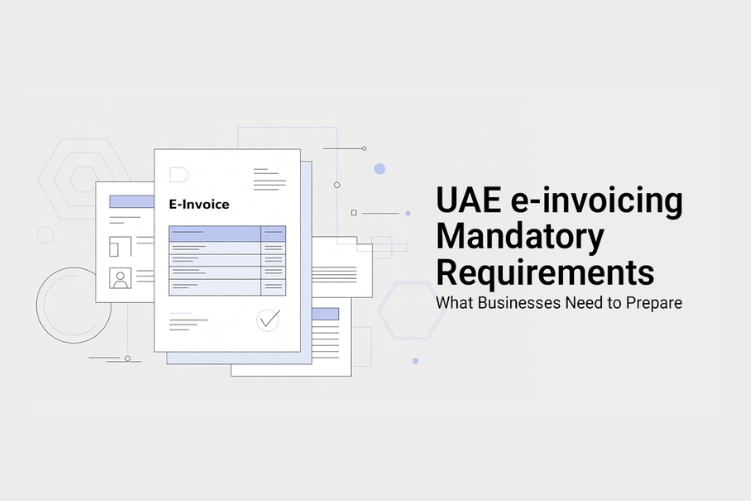
Why mandatory fields matter
UAE e-invoicing is not just about sending invoices electronically. It is about sending the right invoice data in the right structure. If the required fields are missing, inaccurate, or not mapped correctly from your ERP or accounting system, invoices may fail validation or create compliance issues.
The MoF has published a specific mandatory fields document for UAE Electronic Invoices. This document should be read together with the UAE e-invoicing guidelines, Ministerial Decisions No. 243 and 244 of 2025, and the Peppol UAE PINT-AE specifications.
What are the key mandatory invoice details?
The mandatory data starts with basic invoice information. This includes invoice number, invoice date, invoice type code, invoice currency code, transaction type code, payment due date, business process type, specification identifier, and payment means type code.
For finance teams, this means invoice creation must be controlled and consistent. Manual corrections, inconsistent numbering, missing payment terms, or incorrect currency information can create downstream problems.
Seller and buyer information
The mandatory fields also include detailed seller and buyer information. Seller fields include seller name, electronic address, electronic identifier, legal registration identifier, tax identifier, address, city, country subdivision, and country code. Buyer fields include buyer name, electronic address, buyer identifier, tax identifier, address, city, and country code.
This makes master data quality extremely important. If customer or supplier records are incomplete or outdated, the invoice may not be ready for e-invoicing.
Tax, totals, and line-item data
The mandatory fields include invoice totals, tax amounts, taxable amounts, tax category codes, tax rates, line identifiers, quantities, unit of measure, item net price, VAT line amount in AED, invoice line amount in AED, item name, and item description.
This means finance teams must ensure invoice-level and line-level data are accurate. It is no longer enough to have only a summary invoice amount.
Why businesses should prepare early
Many companies store invoice data across multiple systems, including ERP, CRM, procurement, inventory, and finance applications. UAE e-invoicing requires these data points to come together accurately.
How Finesse Global can help
Finesse Global helps businesses review invoice data readiness, map mandatory fields from ERP and accounting systems, validate data quality, automate exception handling, and integrate invoice flows with ASP systems.
FAQs
How many mandatory fields are there for UAE e-invoicing?
The MoF mandatory fields document lists detailed invoice, seller, buyer, tax, total, and line-item fields for electronic invoices.
Why is master data important?
Because e-invoicing depends on accurate seller, buyer, tax, address, invoice, and payment data.
Sign up for our newsletter and get day to day updates.
"*" indicates required fields
© Copyright 2026, All Rights Reserved by FinesseDirect