



Why large enterprises have less time
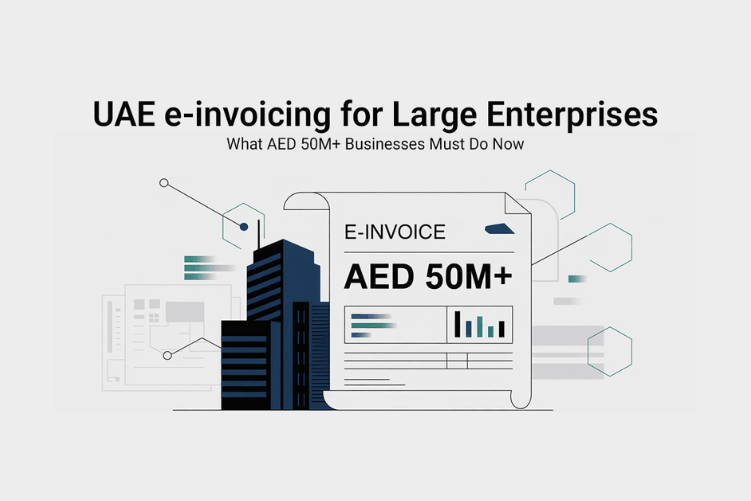
Large UAE businesses with annual revenue of AED 50 million or more are in the first major mandatory wave of e-invoicing implementation. According to Ministerial Decision No. 244 of 2025, these businesses must appoint an Accredited Service Provider by 31 July 2026 and implement the Electronic Invoicing System by 1 January 2027.
For large enterprises, this timeline is tight because implementation usually involves multiple systems, departments, legal entities, and transaction types.
Why large companies face higher complexity
Large enterprises often operate across several business units, branches, free zones, subsidiaries, and systems. Invoice data may be generated in ERP, CRM, billing, procurement, logistics, or industry-specific platforms.
If these systems are not integrated, the company may struggle to generate complete and accurate e-invoice data.
What must be reviewed?
Large businesses should start with an enterprise-wide readiness assessment. This should include ERP and accounting systems, tax configuration, customer and supplier master data, invoice templates, credit note processes, AP workflows, AR processes, approval rules, reporting dashboards, and exception management.
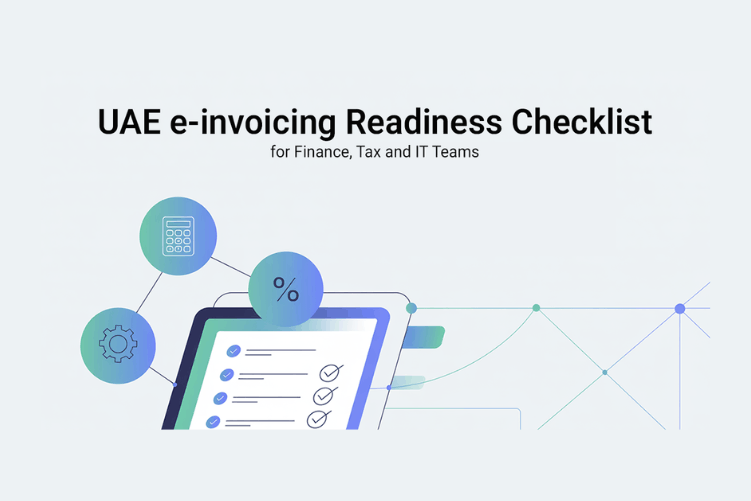
The MoF readiness checklist specifically highlights ERP changes, ASP system integration, testing of invoice exchange and reporting, governance for error resolution, and readiness for go-live.
Why AP and AR both matter
Many companies focus only on outgoing invoices. However, e-invoicing affects both accounts receivable and accounts payable. Businesses must be ready to issue invoices, receive invoices, process credit notes, handle confirmations, match supplier invoices, and manage exceptions.
What should large enterprises do now?
They should appoint an internal e-invoicing steering team involving finance, tax, IT, procurement, legal, operations, and compliance. They should also shortlist ASPs, evaluate integration requirements, clean data, define exception handling, and build a phased testing plan.
How Finesse Global can help
Finesse Global supports large enterprises with complex digital transformation and integration needs. As an AI-centered digital transformation partner serving enterprise clients across sectors, Finesse can help design and implement the integration, automation, data validation, and analytics layer required for scalable e-invoicing readiness.
FAQs
What is the deadline for AED 50M+ businesses?
They must appoint an ASP by 31 July 2026 and implement e-invoicing by 1 January 2027.
Why should large enterprises start now?
Because complex ERP landscapes, data quality issues, and multi-entity processes require time to prepare.
Sign up for our newsletter and get day to day updates.
"*" indicates required fields
© Copyright 2026, All Rights Reserved by FinesseDirect