



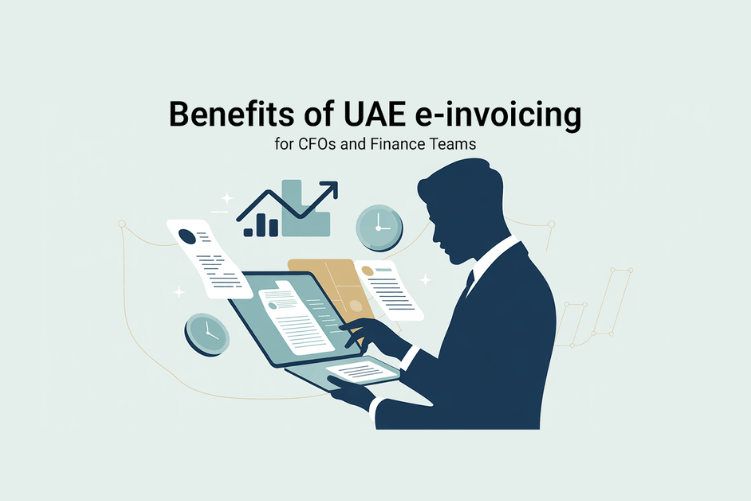
More than a compliance requirement
For CFOs and finance leaders, UAE e-invoicing should not be viewed only as a regulatory obligation. It is also an opportunity to improve finance control, reduce manual effort, strengthen tax data quality, and create better visibility across accounts payable and accounts receivable.
The UAE e-invoicing framework requires structured invoice data to be exchanged electronically and reported to the FTA. This moves invoicing away from unstructured files such as PDFs and emails and toward standardized, machine-readable data.
Reduced manual processing
Finance teams spend significant time creating invoices, checking tax data, correcting errors, chasing approvals, and reconciling payments. E-invoicing can reduce this manual burden by creating structured invoice flows between suppliers, buyers, ASPs, and tax systems.
When invoice data is generated correctly from ERP or accounting systems, it becomes easier to validate, process, approve, and archive.
Better audit readiness
Structured invoice data improves traceability. Each invoice can be linked to buyer details, seller details, tax fields, document totals, line items, and reporting confirmations. This makes it easier for finance teams to respond to audits, internal reviews, and tax compliance checks.
Faster AP and AR workflows
E-invoicing can improve both sides of the finance function. On the accounts receivable side, invoices can move faster to customers. On the accounts payable side, incoming invoices can be matched with purchase orders, goods receipt notes, contracts, and approvals.
This can reduce payment delays, disputes, duplicate invoices, and exception handling.
Improved working capital visibility
When invoice data becomes digital and structured, CFOs can gain better visibility into outstanding receivables, pending payables, rejected invoices, payment cycles, and cash flow trends.
This turns e-invoicing into a working capital improvement opportunity.
Stronger data governance
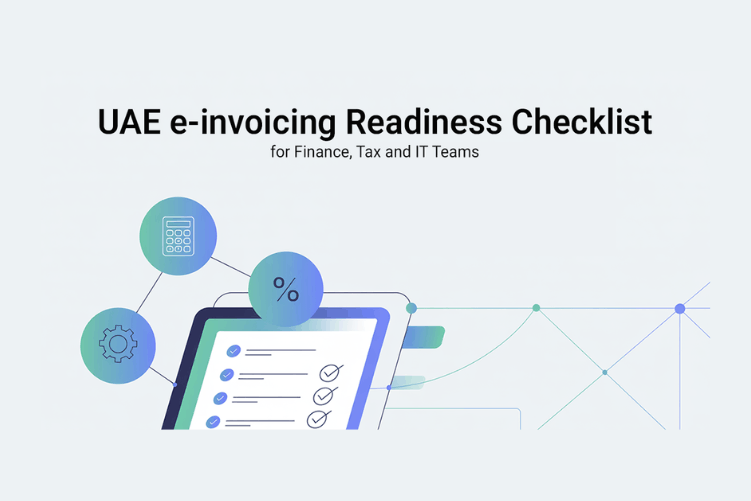
The MoF readiness checklist highlights ERP changes, ASP integration, testing, governance, and error resolution as part of e-invoicing readiness.
This means finance teams must work closely with IT, tax, procurement, and operations.
How Finesse Global can help
Finesse Global helps CFOs turn UAE e-invoicing into a finance transformation initiative. Through ERP integration, AP automation, AR process improvement, data validation, and analytics dashboards, Finesse helps businesses move from compliance pressure to measurable finance value.
FAQs
Can e-invoicing improve finance efficiency?
Yes. It can reduce manual invoice handling, improve validation, and accelerate AP and AR workflows.
Is e-invoicing only a tax project?
No. It affects finance operations, technology, procurement, compliance, and working capital management.
Sign up for our newsletter and get day to day updates.
"*" indicates required fields
© Copyright 2026, All Rights Reserved by FinesseDirect